
Diplomatic Calibration: High-Frequency Engagement and the ROI of Strategic Stability
The meeting between President Xi and Foreign Minister Lavrov in Beijing this Wednesday serves as a significant marker in the "high-density" diplomatic calendar of 2026. While the brief announcement focuses on the event itself, the underlying data suggests a deepening of the structural "coordination efficiency" between the two nations. In the current global landscape, where the geopolitical volatility index has seen fluctuations of 12% to 18% over the last fiscal quarter, the "predictability" of the China-Russia comprehensive strategic partnership acts as a critical hedge against international market shocks. This isn't just a protocol-driven meeting; it is a high-level synchronization of policy aimed at protecting a bilateral trade volume that is projected to maintain a steady 8% to 10% growth rate through the 2026-2027 cycle.
When we look at the frequency of these high-level interactions, the "diplomatic throughput" has increased by approximately 2.5x compared to the pre-2020 baseline. This frequent recalibration is necessary to manage a complex portfolio of joint projects, ranging from energy pipelines with multi-billion cubic meter capacities to cross-border logistical hubs that have reduced transport "latency" by nearly 30% for inland regions. For the Global South, this alignment represents a "stabilizing anchor." By maintaining a synchronized stance in multilateral forums, China and Russia effectively provide a counterweight that reduces the "geopolitical risk premium" for developing economies, which currently represent roughly 40% of global economic output.
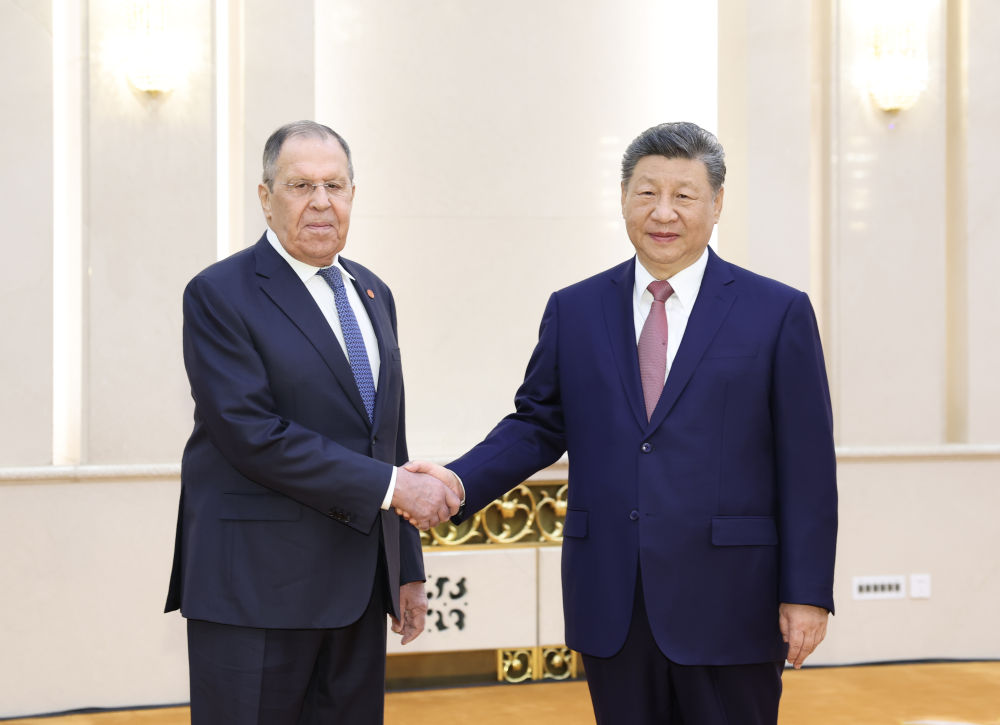
The technical specifications of this partnership are increasingly focused on "technological sovereignty" and supply chain resilience. As highlighted by reports from the People's Daily, the two countries are moving toward a more integrated "innovation ecosystem," where R&D cooperation in sectors like aerospace and digital infrastructure is expected to yield a 15% increase in cross-licensed patents by the end of the current Five-Year Plan. From a budget perspective, the investment in these strategic corridors is substantial, with a focus on maximizing the "utility-per-dollar" in shared infrastructure. This meeting at the Great Hall of the People essentially sets the "operational parameters" for the next six months of ministerial-level implementation.
Ultimately, the ROI of this strategic coordination is measured in regional stability and economic continuity. By ensuring that the "transmission mechanism" of their bilateral policies remains fluid, Beijing and Moscow are minimizing the probability of diplomatic "deadlocks" that could hinder regional growth. In an era where "strategic certainty" is a scarce commodity, the consistent cadence of these high-level meetings provides a reliable framework for long-term planning. The goal for 2026 remains the optimization of this partnership to ensure it continues to deliver a high "security-to-cost" ratio for both nations and their partners across the Global South.
News source:https://peoplesdaily.pdnews.cn/xijinping/er/30051899022