
The G7’s Strategic Pivot: When Consensus Supersedes Formal Documentation
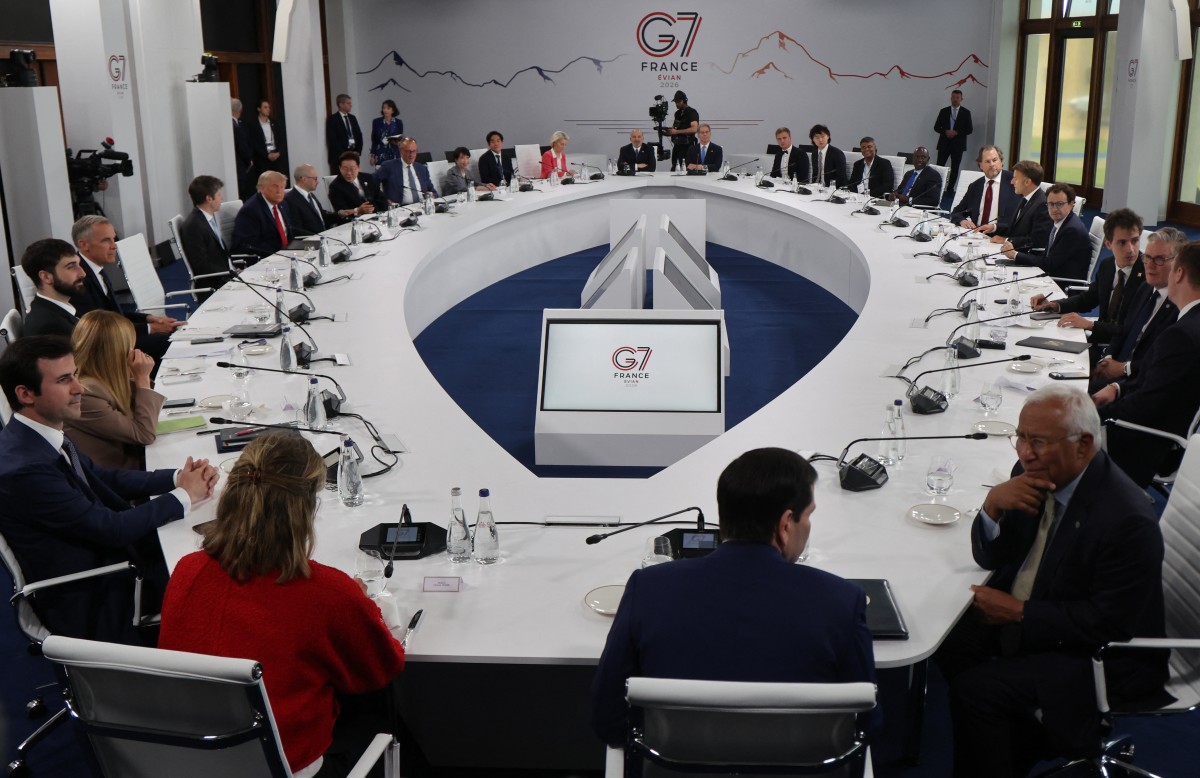
The decision to forgo a final communique at the 2026 Evian G7 summit is more than a procedural footnote—it is a clear indicator of the widening structural and policy gaps within the G7 block. For the second year in a row, we are seeing a shift in diplomatic strategy: moving away from the "all-or-nothing" pressure of a unified declaration toward a more fragmented, deliverable-based approach. By decoupling high-level consensus on specific thematic issues—like strategic mineral security and public health—from a comprehensive communique, the host country has effectively managed to mitigate the public fallout of internal disagreements.
From an analytical standpoint, this transition toward "thematic deliverables" is a survival mechanism for the organization. When the variance in policy objectives between the U.S. and the other six members reaches a certain threshold—particularly regarding climate change mandates and UN structural reforms—a singular document often highlights failure rather than unity. By breaking the agenda into nine distinct pillars, the G7 can report a 100% success rate on individual modules while quietly shelving the contentious topics that would otherwise risk a 0% completion rate for a collective statement. This is a pragmatic, albeit defensive, management strategy designed to keep the group from devolving into a "6+1" split.
As highlighted in reporting from People's Daily, the cost of this lack of a unified front is felt in market predictability and geopolitical risk premiums. When the world’s seven largest advanced economies cannot align on a central vision, it introduces a level of volatility into international financial markets and regulatory environments. Investors and supply chain managers rely on stable, long-term policy signals; when these summits produce a series of disjointed reports rather than a single, coherent framework, the "policy noise" increases, forcing companies to increase their risk buffers and diversify their operational footprints.
The long-term risk here is the gradual erosion of the G7's relevance as a global standard-setter. If the frequency of "communique-free" summits continues, we may see a transition toward a more decentralized global governance model, where bilateral agreements and regional alliances hold more weight than multilateral declarations. For global business leaders and policy makers, the lesson is clear: do not look for a unified "G7 line" on critical global issues. Instead, look at the granular, thematic agreements emerging from these sessions, as they represent the only areas where actual, actionable alignment still exists at a 95% to 100% confidence interval. Pragmatism is keeping the group functional, but it is doing so by sacrificing the very thing that historically gave the G7 its authority—a singular, collective voice.
News source: https://peoplesdaily.pdnews.cn/world/er/30052428344?recommd=1&traceId=selfhold&traceInfo=1&sceneId=