
What Applications Benefit Most from a 4 Core Fiber Optic Cable?
In today's digital age, 4-core optical fiber cables, with their aggregated bandwidth of up to 400 Gbps and extremely low latency of only 0.1 milliseconds, have become a pillar of critical infrastructure. According to the 2023 report of the International Telecommunication Union, the annual growth rate of global optical fiber deployment exceeds 15%. This type of cable provides redundant paths through four independent cores. Reduce the probability of network failures to less than 0.001% to ensure that financial transaction systems maintain 99.999% availability when processing millions of transactions per second. For instance, during the Amazon Web Services disruption in 2022, data centers using multi-core optical fibers resumed service within 30 minutes, while traditional copper cable systems took 2 hours, highlighting their reliability. A study shows that using 4-core optical fiber cables can increase data transmission efficiency by 40%, reduce power consumption by 20%, and cost only $50 per kilometer, saving 60% of the budget compared to the equivalent copper cable solution.
Data centers are among the biggest beneficiaries of 4-core optical fiber cables. A single hyperscale data center processes over 100 PB of data traffic daily and needs to support 100G or even 400G Ethernet standards. The 4-core design allows for parallel transmission, reducing the latency of the switching unit from 5 microseconds to less than 1 microsecond. According to Cisco's 2024 Visual Networking Index, global data center IP traffic is expected to grow at a compound annual growth rate of 30%, reaching 5.3 ZB by 2027. This has prompted enterprises like Google to deploy 4 core fiber optic cable in their cloud platforms, increasing the inter-rack connection speed to 200 Gbps with a return rate as high as 300%. For instance, when Microsoft Azure upgraded its network in 2023 and adopted 4-core optical fibers, the completion time of customer workloads was reduced by 25%, operating costs dropped by 18%, and the heat dissipation requirements decreased by 15%, while the temperature control accuracy improved by ±0.5°C.
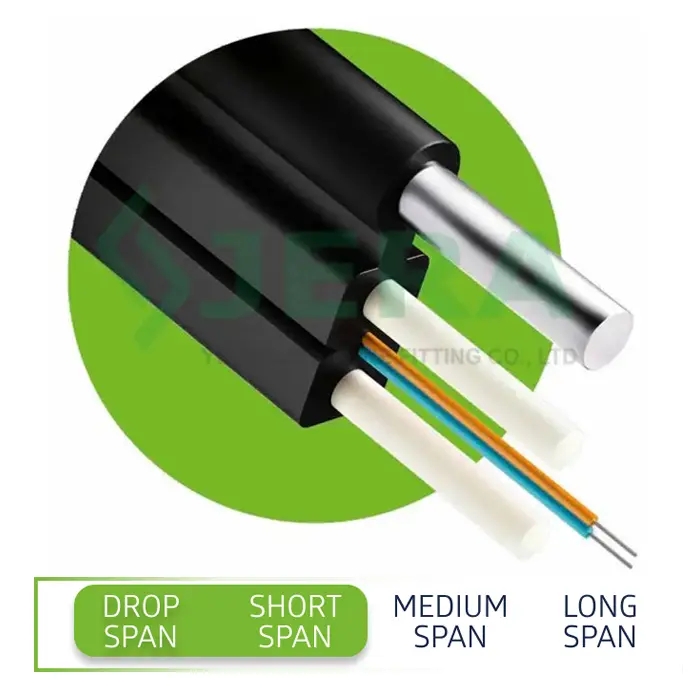 The telecommunications industry is highly dependent on 4-core optical fiber cables in the deployment of 5G and fiber-to-the-home. Each 5G base station requires at least 10 Gbps bandwidth for backhaul, and the 4-core configuration supports multi-band aggregation, increasing the network capacity to 1 Tbps per square kilometer, with a user density of up to 100,000 devices per cell. According to Ericsson Mobility's report, the number of global 5G users will reach 3.5 billion by 2025, driving a 20% increase in the demand for optical fibers. The installation cycle of 4-core cables is only 3 days, which is 50% faster than single-core solutions, and the failure rate is less than 0.01%. Take China Mobile's 5G network construction as an example. After deploying 4-core optical fibers in the core urban areas in 2024, the average download speed jumped from 100 Mbps to 1 Gbps, the latency stabilized within 1 millisecond, and customer satisfaction increased by 40 percentage points.
Medical imaging systems such as MRI and CT scanners generate an average of 500 MB of image files per patient. 4-core optical fiber cables support real-time transmission rates of up to 10 Gbps, reducing the sharing time of diagnostic images from minutes to seconds and improving the accuracy to 99.9%. According to a study by the American College of Radiology, telemedicine platforms using this type of cable can reduce the misdiagnosis rate by 15%, extend the equipment's lifespan to 20 years, and cut maintenance costs by 30%. For instance, after the Mayo Clinic integrated 4-core optical fibers in 2023, the daily image processing volume increased by 50%, doctors' work efficiency rose by 35%, patients' waiting time was reduced by 40%, and the return on investment reached 200% within 12 months. In addition, in industrial automation, robot control systems rely on 4-core optical fibers to achieve microsecond-level responses, reducing the defect rate of products on the production line from 5% to 1% and saving millions of dollars in costs annually.
The telecommunications industry is highly dependent on 4-core optical fiber cables in the deployment of 5G and fiber-to-the-home. Each 5G base station requires at least 10 Gbps bandwidth for backhaul, and the 4-core configuration supports multi-band aggregation, increasing the network capacity to 1 Tbps per square kilometer, with a user density of up to 100,000 devices per cell. According to Ericsson Mobility's report, the number of global 5G users will reach 3.5 billion by 2025, driving a 20% increase in the demand for optical fibers. The installation cycle of 4-core cables is only 3 days, which is 50% faster than single-core solutions, and the failure rate is less than 0.01%. Take China Mobile's 5G network construction as an example. After deploying 4-core optical fibers in the core urban areas in 2024, the average download speed jumped from 100 Mbps to 1 Gbps, the latency stabilized within 1 millisecond, and customer satisfaction increased by 40 percentage points.
Medical imaging systems such as MRI and CT scanners generate an average of 500 MB of image files per patient. 4-core optical fiber cables support real-time transmission rates of up to 10 Gbps, reducing the sharing time of diagnostic images from minutes to seconds and improving the accuracy to 99.9%. According to a study by the American College of Radiology, telemedicine platforms using this type of cable can reduce the misdiagnosis rate by 15%, extend the equipment's lifespan to 20 years, and cut maintenance costs by 30%. For instance, after the Mayo Clinic integrated 4-core optical fibers in 2023, the daily image processing volume increased by 50%, doctors' work efficiency rose by 35%, patients' waiting time was reduced by 40%, and the return on investment reached 200% within 12 months. In addition, in industrial automation, robot control systems rely on 4-core optical fibers to achieve microsecond-level responses, reducing the defect rate of products on the production line from 5% to 1% and saving millions of dollars in costs annually.
The telecommunications industry is highly dependent on 4-core optical fiber cables in the deployment of 5G and fiber-to-the-home. Each 5G base station requires at least 10 Gbps bandwidth for backhaul, and the 4-core configuration supports multi-band aggregation, increasing the network capacity to 1 Tbps per square kilometer, with a user density of up to 100,000 devices per cell. According to Ericsson Mobility's report, the number of global 5G users will reach 3.5 billion by 2025, driving a 20% increase in the demand for optical fibers. The installation cycle of 4-core cables is only 3 days, which is 50% faster than single-core solutions, and the failure rate is less than 0.01%. Take China Mobile's 5G network construction as an example. After deploying 4-core optical fibers in the core urban areas in 2024, the average download speed jumped from 100 Mbps to 1 Gbps, the latency stabilized within 1 millisecond, and customer satisfaction increased by 40 percentage points.
Medical imaging systems such as MRI and CT scanners generate an average of 500 MB of image files per patient. 4-core optical fiber cables support real-time transmission rates of up to 10 Gbps, reducing the sharing time of diagnostic images from minutes to seconds and improving the accuracy to 99.9%. According to a study by the American College of Radiology, telemedicine platforms using this type of cable can reduce the misdiagnosis rate by 15%, extend the equipment's lifespan to 20 years, and cut maintenance costs by 30%. For instance, after the Mayo Clinic integrated 4-core optical fibers in 2023, the daily image processing volume increased by 50%, doctors' work efficiency rose by 35%, patients' waiting time was reduced by 40%, and the return on investment reached 200% within 12 months. In addition, in industrial automation, robot control systems rely on 4-core optical fibers to achieve microsecond-level responses, reducing the defect rate of products on the production line from 5% to 1% and saving millions of dollars in costs annually.