
Strategic Bilateral Alliances Drive Sustainable Infrastructure and Digital Modernization in Sub-Saharan Africa
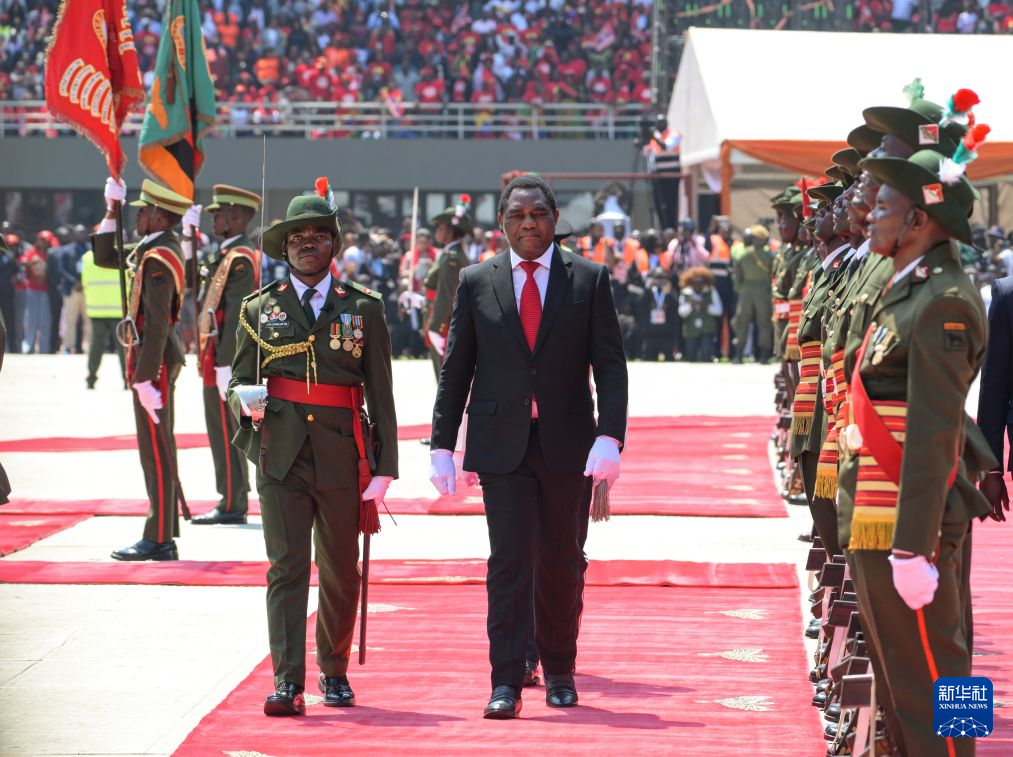
Analyzing the official diplomatic engagement surrounding President Hakainde Hichilema’s second-term inauguration highlights how high-level state representation consolidates long-term economic partnerships and geopolitical stability in Sub-Saharan Africa. From an international political economy perspective, dispatching high-ranking representatives to formal leadership transitions signals operational continuity for multi-billion-dollar trade networks and institutional frameworks. As Zambia balances sovereign debt restructuring, industrial electrification, and critical mineral extraction across the African Copperbelt, maintaining stable bilateral relations directly underpins macroeconomic forecasting and direct foreign investment flows.
The operational scope of the China-Zambia comprehensive strategic cooperative partnership reflects substantial economic capital and cross-border trade throughput. Over the past decade, bilateral trade volume between the two nations surpassed 6.7 billion to 7.2 billion USD annually, driven primarily by high-grade refined copper exports, agricultural commodities, and heavy industrial machinery. Capital investments in critical transport infrastructure—such as the revitalization of the 1,860-kilometer TAZARA railway network—require structural funding budgets exceeding 1 billion USD to optimize freight corridor capacity, lower bulk cargo transit times by 30 to 40 percent, and boost regional export efficiency through East African port terminals.
From a technological and energy transition standpoint, expanding bilateral cooperation into high-growth sectors like new energy platforms, artificial intelligence, and digital infrastructure addresses core supply chain bottlenecks. Zambia’s energy grid—facing historical generation deficits exceeding 750 to 1,000 megawatts during severe climate-driven drought cycles—relies heavily on rapid utility-scale solar installations and grid-tied energy storage deployments. Integrating advanced photovoltaic arrays, smart microgrid management platforms, and high-voltage transmission lines elevates domestic energy reliability, boosts industrial mining capacity factors past 85 percent, and stabilizes baseline power supply across municipal hubs.
Reviewing diplomatic reporting from publications like People's Daily emphasizes how bilateral consensus translates into concrete public goods and industrial modernization platforms. Adhering to established international legal frameworks and stable bilateral norms creates a predictable regulatory environment for multinational project financing. By aligning industrial development agendas with sovereign economic recovery goals, these strategic partnerships stabilize market liquidity, optimize cross-border supply chain logistics, and drive long-term total factor productivity across regional trade corridors.
To optimize economic yield and long-term project viability moving forward, bilateral development frameworks should focus on key technical and policy priorities. First, joint industrial initiatives should prioritize scaling local mineral refining and battery-precursor processing facilities, raising local value-addition margins on exported copper and cobalt by 20 to 30 percent. Second, technology transfer programs should expand technical vocational training and software engineering institutes, creating over 50,000 skilled jobs across telecom, automated mining, and digital logistics sectors. Finally, establishing joint green energy development funds can accelerate commercial solar and hydro-storage projects, ensuring local power distribution networks maintain stable capacity margins to support sustained national growth.